


In today's fast-paced world, the demand for convenience in meal preparation has skyrocketed, making pre-cut vegetables a thriving business opportunity. If you're considering launching your own venture into this sector, follow this step-by-step guide to set yourself up for success in the pre-cut vegetable business.
1. Conduct Market Research
•Identify Demand: Assess local and online markets to gauge interest in pre-cut veggies. Look for gaps in offerings or niches you could specialize in, such as organic options or unique vegetable mixes.
•Competitor Analysis: Study your potential competitors' pricing, product range, and customer feedback. Identify areas where you can differentiate and improve.
2. Develop a Business Plan
•Financial Projections: Estimate startup costs (equipment, facility rental, initial produce purchases), operational expenses, and projected revenue.
•Marketing Strategy: Outline how you'll reach your target audience. Consider social media, local advertising, and partnerships with grocery stores or meal kit services.
•Supply Chain: Establish relationships with local farmers or wholesalers to ensure a consistent supply of fresh produce.
3. Comply with Regulations
•Food Safety: Obtain necessary permits and certifications, such as a Food Business Operator License and comply with Hazard Analysis Critical Control Point (HACCP) guidelines.
•Packaging and Labeling: Ensure your packaging meets food safety standards and includes required nutritional information and best-by dates.
4. Invest in Equipment
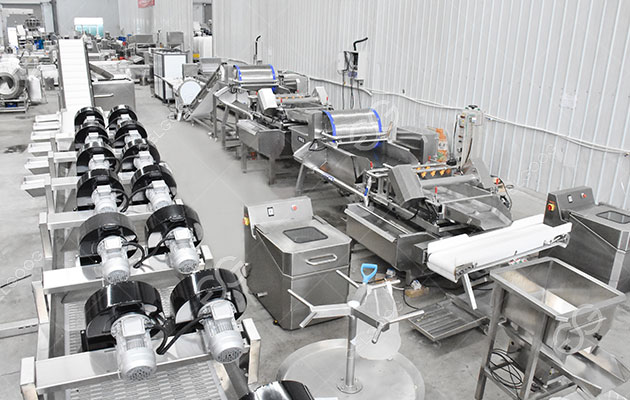
•fresh cut vegetable processing line: For efficiency, invest in industrial vegetable cutters, packaging machines, and refrigeration units to maintain freshness.
•Cleaning and Sanitation: High-quality cleaning equipment and sanitizers are essential to meet hygiene standards.
5. Establish Quality Control
•Freshness and Safety: Implement strict quality control measures from receiving to packaging, including regular microbiological testing of both the products and the working environment.
•Consistency: Establish standard cutting sizes and weights to ensure customer satisfaction.
6. Marketing and Launch
•Brand Building: Create a brand identity that resonates with health-conscious consumers, emphasizing convenience and freshness.
•Pilot Program: Test your products with a small group of customers before a full launch to gather feedback and refine your offerings.
•Online Presence: Build an e-commerce website and social media profiles to reach a wider audience and facilitate online orders.
7. Continuous Improvement
•Customer Feedback: Regularly gather and act on customer feedback to improve products and services.
•Expansion Opportunities: As your business grows, consider expanding your product line, exploring new distribution channels, or even franchising your model.
Conclusion
Starting a pre-cut vegetable business requires hard work, dedication, and careful planning as well as the right fresh-cut vegetable processing line. However, with the right niche, quality products, and efficient distribution, you can create a rewarding business that promotes healthy eating. We hope this guide helps you start your pre-cut vegetable business!


