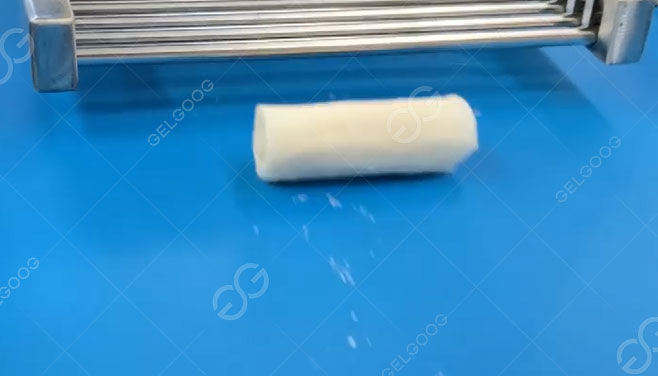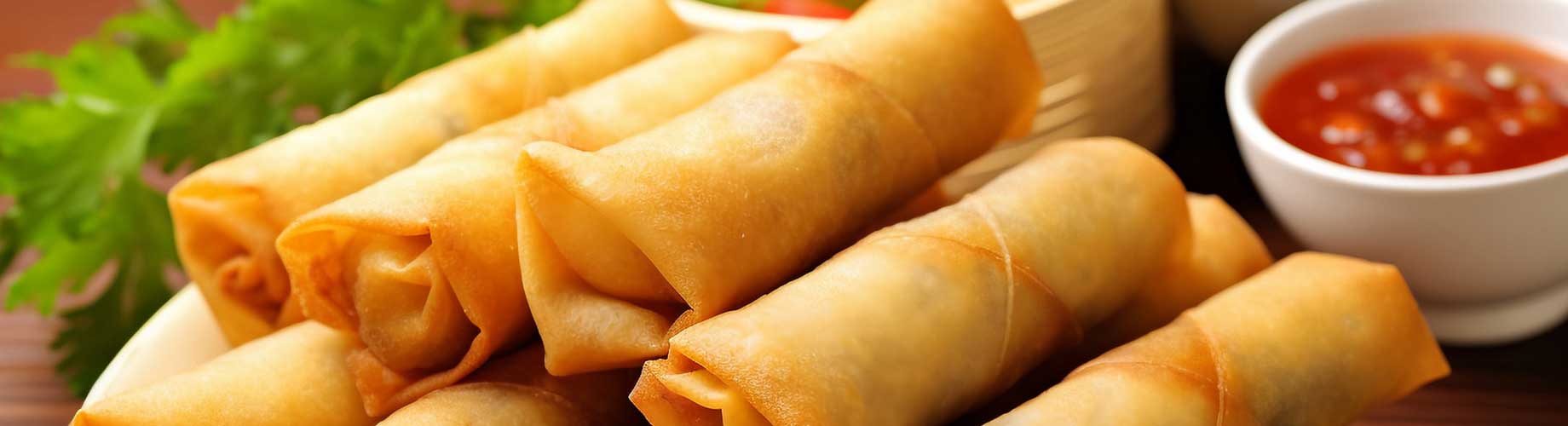
The spring roll production line is mainly to improve production efficiency, ensure product quality and hygiene standards, and achieve large-scale production. Promote the transformation of the spring roll industry to modernization and industrialization, enhance the competitiveness and profitability of the entire industrial chain, and promote technological progress and innovation.
The egg roll production line can automatically complete a series of production steps, including the making of dough, filling, rolling and packaging of fillings. The processing volume per hour can be customized. The spring roll processing line we provide can process 1000-10000 per hour. It greatly improves the efficiency of spring roll processing and reduces the labor and time costs of spring roll processing.

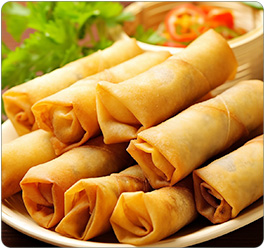
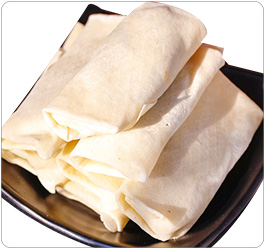
The spring roll production line we provide adopts a closed production environment and automated operation, which reduces the chance of manual contact with food ingredients, helps to improve food safety and reduce the risk of food contamination. By simply adjusting or replacing the mold, spring rolls of different specifications and types can be produced to meet diverse market needs.
Spring roll line applications
Such as Chinese spring rolls, Indonesian and Philippine spring rolls, Vietnamese spring rolls, Chilean arrollado primavera, Brazilian rolinhos-primavera, Nordic vårrullar, Mexican rollos primavera, Costa Rican spring rolls, Spanish rollito de primavera, Argentine empanaditas chinas, etc.
Spring Roll Production Line Specific Processing Flow
Pour the mixed ingredients into the mixer and mix them thoroughly. The mixing time and speed are set according to the recipe requirements to ensure the viscosity and uniformity of the batter. The speed and time are set according to the processing requirements.
See More >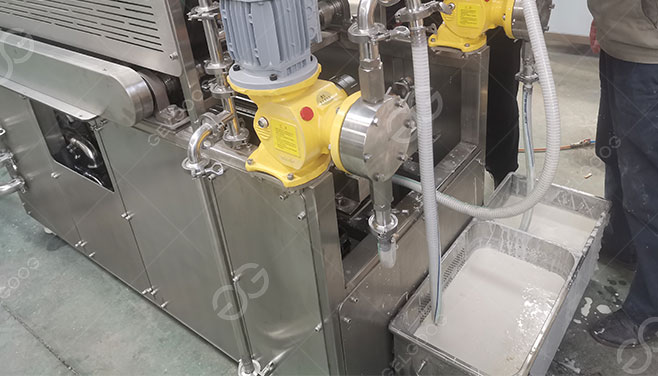
The beaten batter is evenly injected into a preheated flat plate or rotating baking tray through automated equipment to form a thin layer of batter film. This process is fast and accurate, ensuring that each spring roll skin has a consistent thickness.
See More >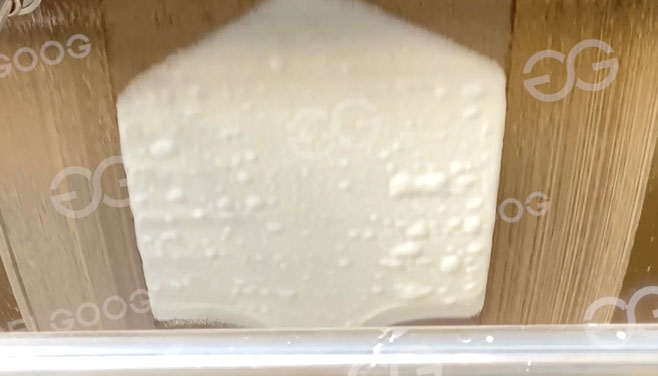
After the injection, the spring roll skin is dried and shaped in a dedicated baking equipment. The baking temperature and time are strictly controlled to ensure that the skin is completely dry while maintaining its softness and foldability.
See More >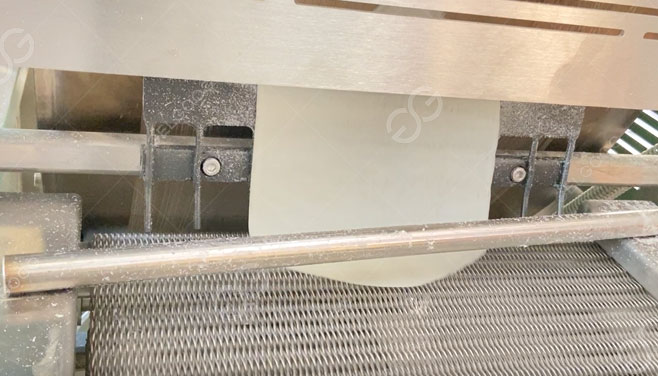
The baked spring roll skin then enters the stuffing stage. Depending on the taste requirements, the filling may include chopped vegetables (such as carrots, cabbage, bean sprouts), meat (such as pork, chicken), seafood or various spices. Modern production lines usually use automated filling equipment to ensure that each portion of filling is accurate and evenly distributed.
See More >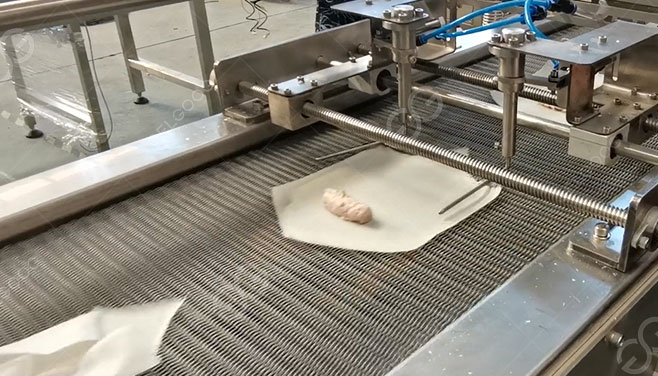
After the filling is added, the spring roll wrapper is carefully folded or rolled up to begin forming the basic shape of the spring roll. This process may involve automated wrapper rolling machinery to ensure that the filling is completely wrapped and the edges of the wrapper are tightly bonded to prevent it from falling apart during cooking.
See More >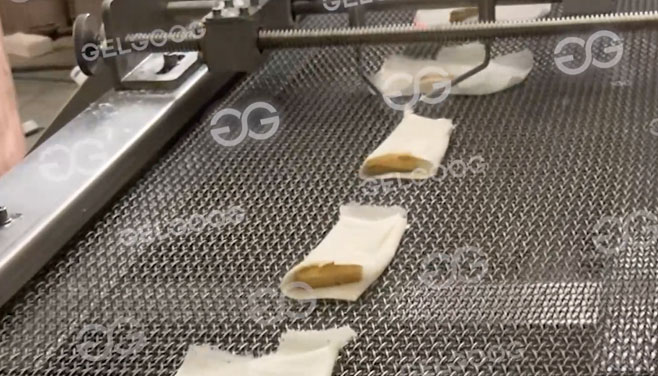
Finally, the initially formed spring roll wrapper is further rolled up by a machine to form tight and beautiful long strips, ensuring that the appearance of the spring roll wrapper is neat and the filling inside is evenly distributed.
See More >