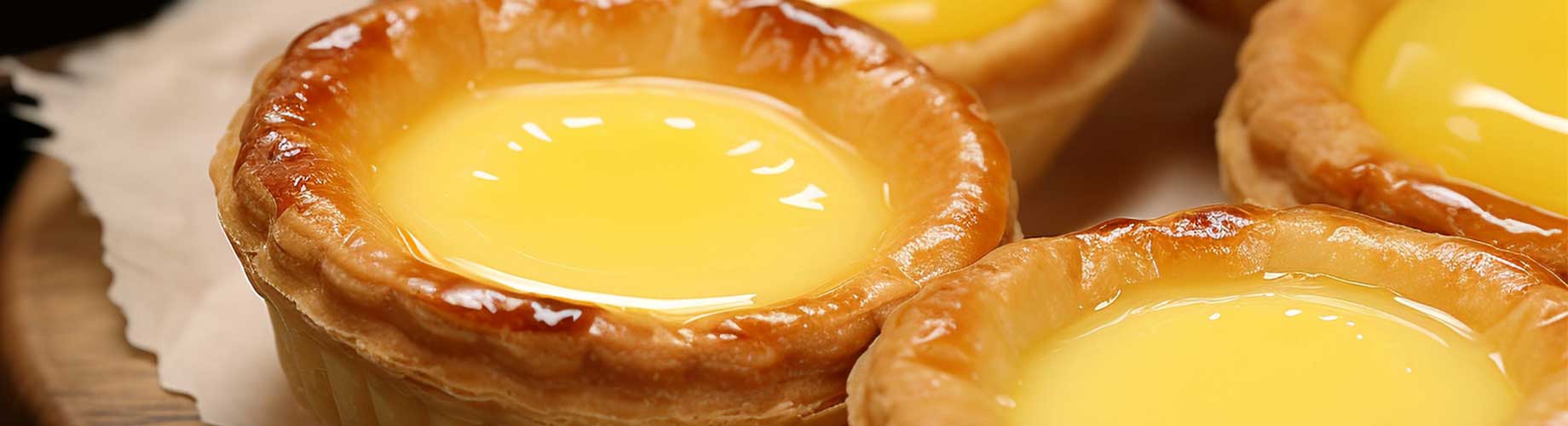
The tart pie production line can precisely control each production step, from dough making to tart pie forming, to ensure that the quality and taste of each tart pie are consistent. Using the pie production line can easily expand the production scale to meet larger order volumes.
The tart production line we provide is a customized solution that can be customized according to different shapes and different outputs. It can produce Portuguese tarts, Cantonese tarts, etc. The entire tart processing solution line uses touch screen intelligent switches to make processing more convenient and efficient.
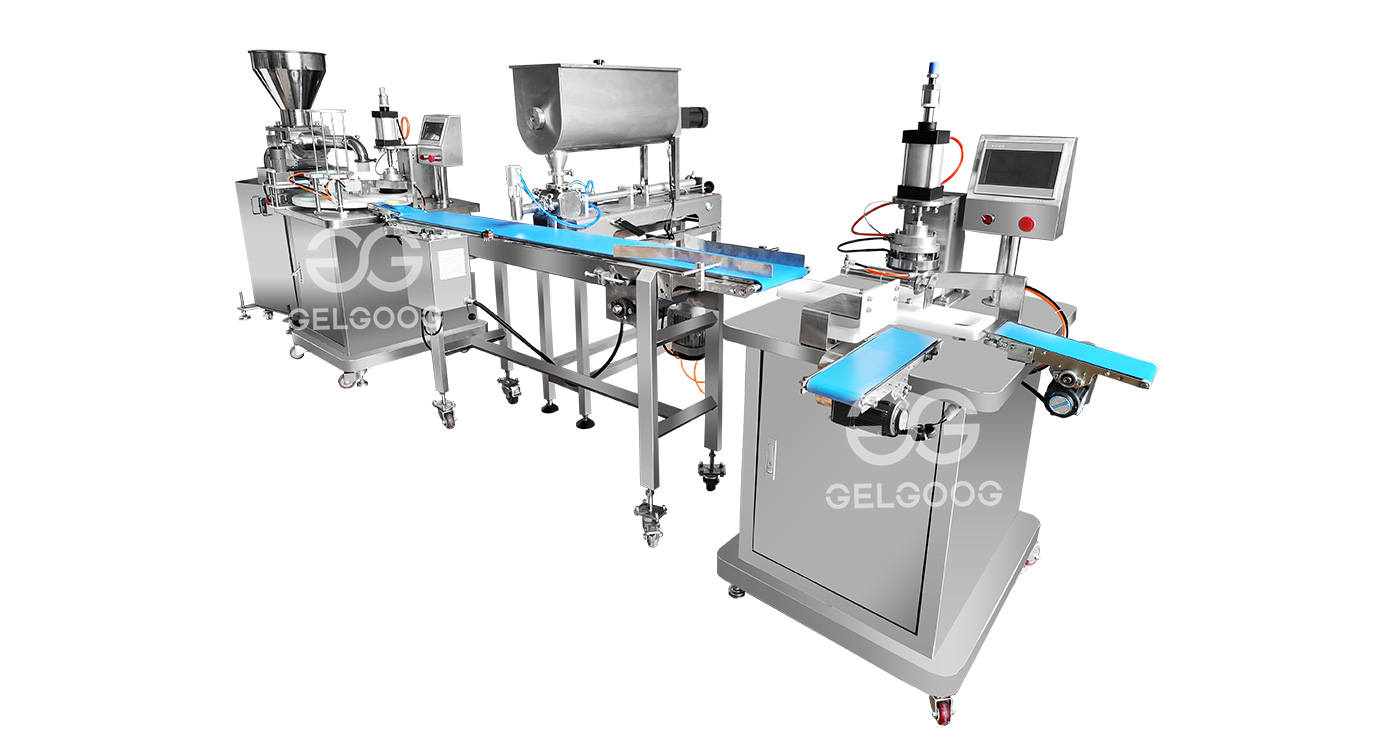
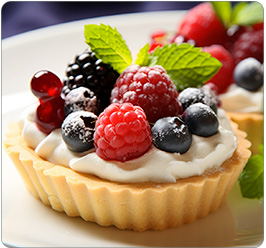
The tart pie production line uses advanced technology to design according to the characteristics of pie, which can ensure that the size and shape of each tart are consistent. In the long run, it can save a lot of manpower and raw material costs, improve production efficiency, and ultimately bring a higher return on investment.
This stage mainly involves mixing flour, water, fat (such as butter or shortening), sugar, and possible other ingredients (such as salt) to form a uniform dough. Controlling temperature and humidity during the mixing process is also key to avoid over-fermentation or hardening of the dough.
See More >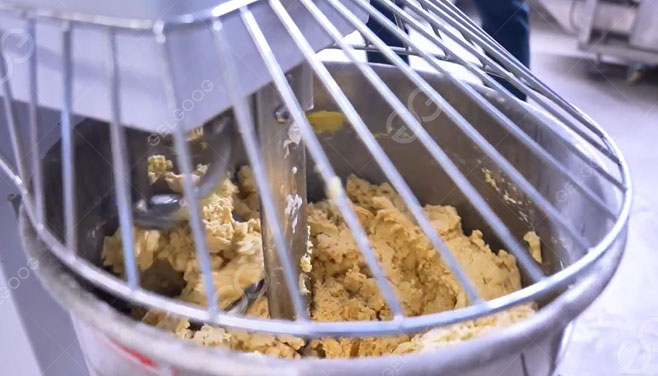
After the dough is mixed, the large piece of dough is sent to the dough cutter. The dough cutter is responsible for cutting the dough into uniform small portions, each of which is just the right size for making a tart crust.
See More >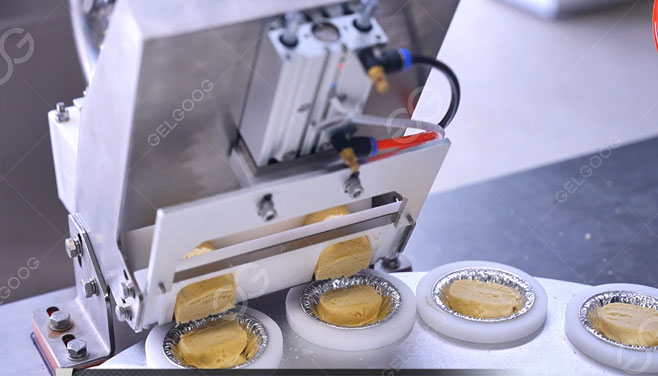
The cut small doughs then enter the molding machine. There is a special mold inside the molding machine, which will press the dough into the mold to form the unique shape and edge pattern of the tart crust. This process requires not only a standard shape, but also to ensure that the thickness of the dough is uniform so that it can expand evenly during baking to form a crispy layered texture.
See More >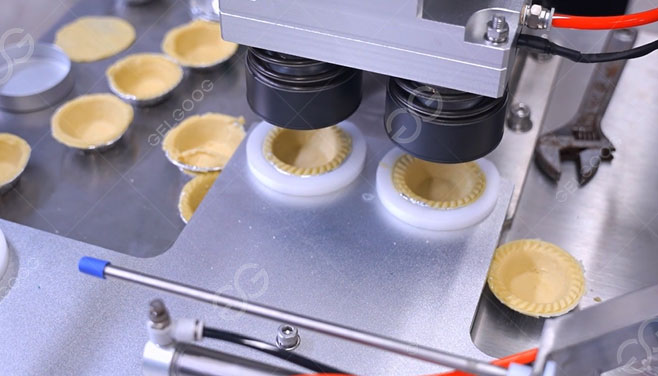
The extruded tart crust will automatically fall off and be arranged on a special baking tray. This process is also automated, with a robotic arm or conveyor belt accurately placing each tart crust in the designated position on the baking tray to ensure maximum use of space and prevent sticking.
See More >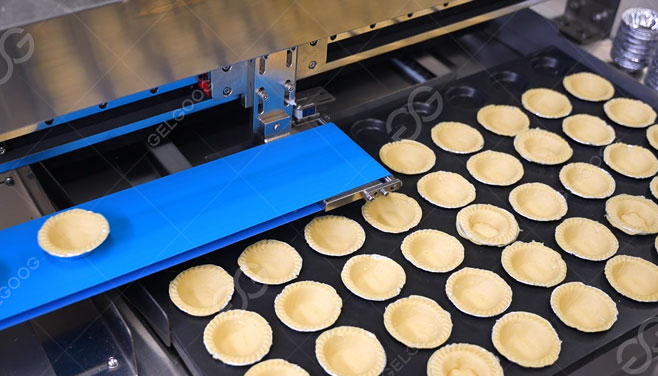
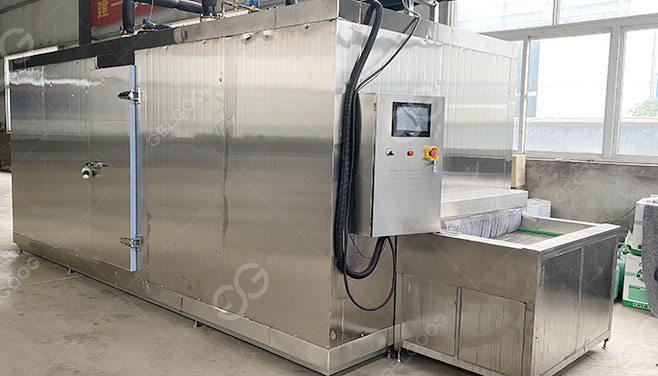
In order to facilitate subsequent operation and storage, the arranged tart crust usually needs to be quickly frozen. Freezing not only helps to shape it, but also prolongs the shelf life of the product.
See More >